What works in Fallout MP today, and what’s still ahead
In the current build
More than another face in the wasteland
22 systems bring players into the same Commonwealth, from shared weather to settlement building
01 / Explore together
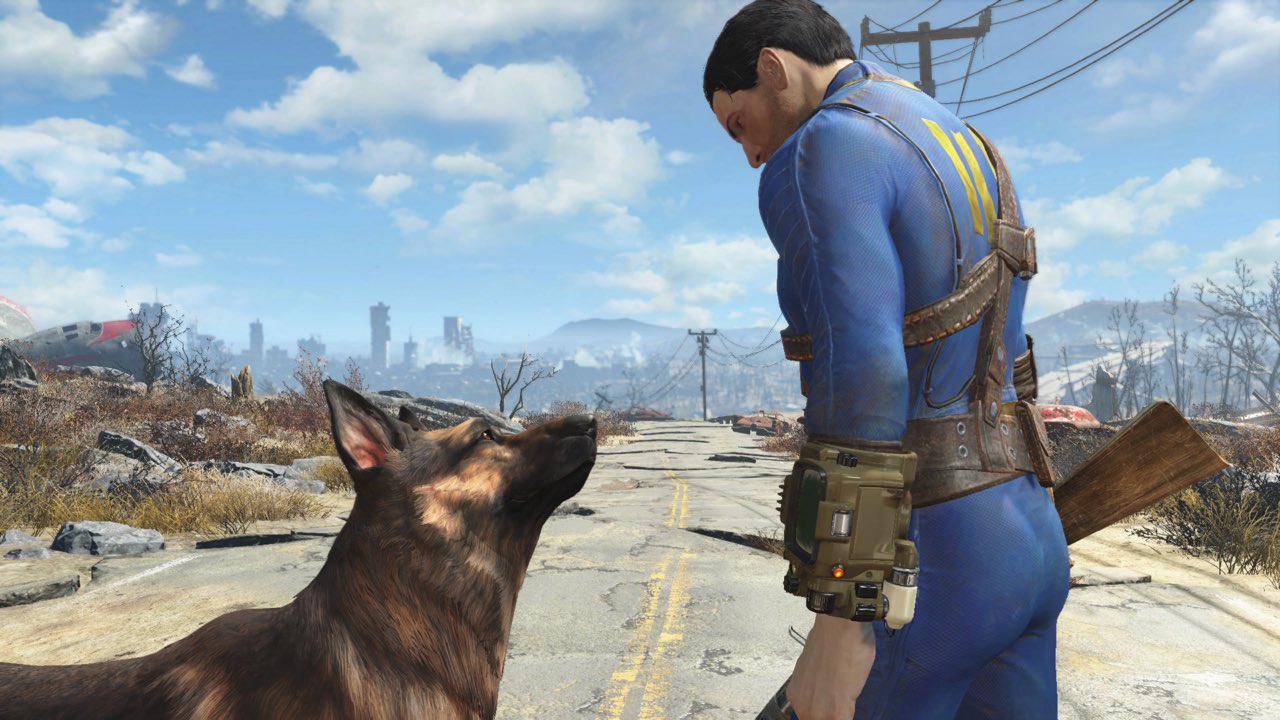
One shared Commonwealth
One session, one world. The hour of the day, the time scale and the weather are the server’s to set, and every client follows them. Players standing in different worldspaces or interiors never bleed into each other’s view.
02 / Build the place
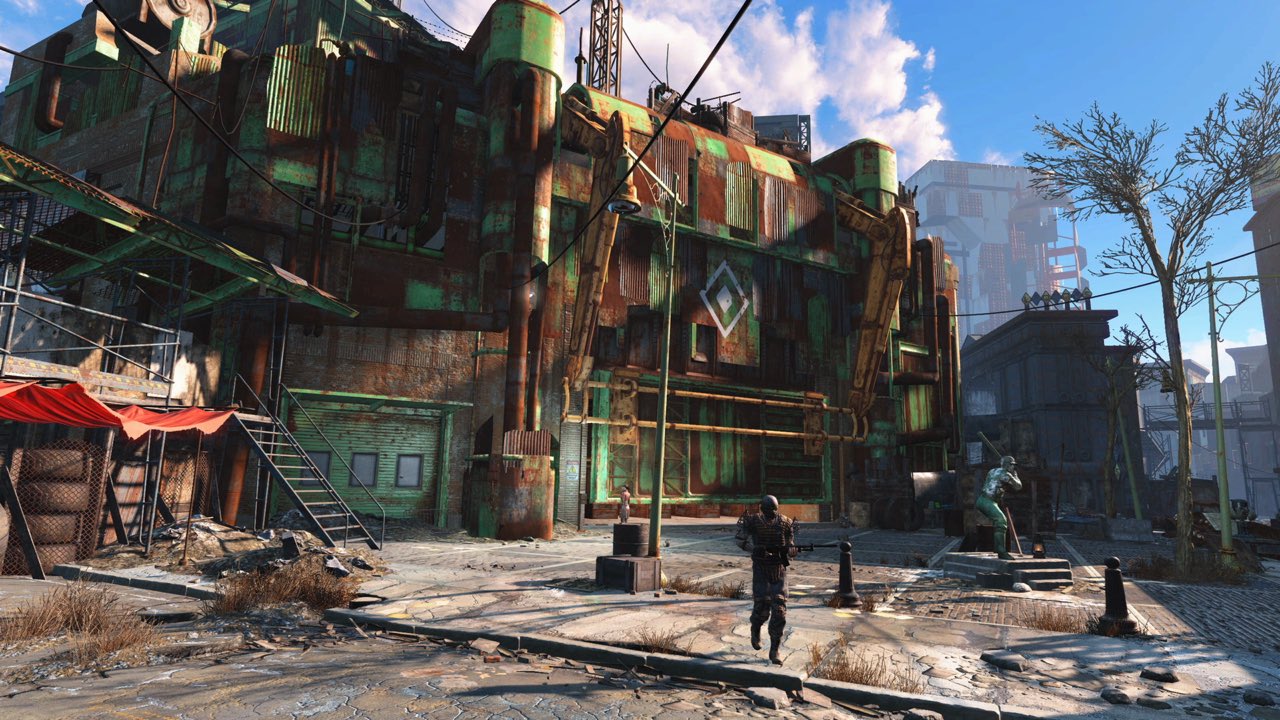
Settlements built together
Build with the game’s own workshop mode and everyone else gets the same walls, turrets and generators, linked to the same workbench and recounted for power and resources. Moving, scrapping and storing go through the server, and what you are holding before you place it is visible to the others as you line it up. The server keeps a settlement for the session.
03 / Make it yours
Scriptable end to end
Game modes, rules and whole questlines are server-side resources in TypeScript or JavaScript, written against the same API the default gamemode uses, with the type declarations published as @falloutmp/types so your editor knows all of it. The base game is the engine; what runs on top is yours.
Under the hood
Explore the systems
Your shot, your call
The shooter decides the hit, because its game is the only one that saw the target where it aimed. The server stamps who fired from the connection itself, so nobody shoots on another player’s behalf, and a script can refuse the hit before the victim ever takes it.
Grenades, missiles and mines that land once
Every projectile a player launches is sent as the launch the game built, and every other client fires the same one from the thrower’s stand-in. Only the thrower’s game decides where it goes off; the blast, the hazard it leaves and the hits it causes are relayed from there, so a grenade cannot hurt the same person twice. Mines are the server’s: it streams them armed, it decides when one goes off, and a script can set one off or lift it unexploded.
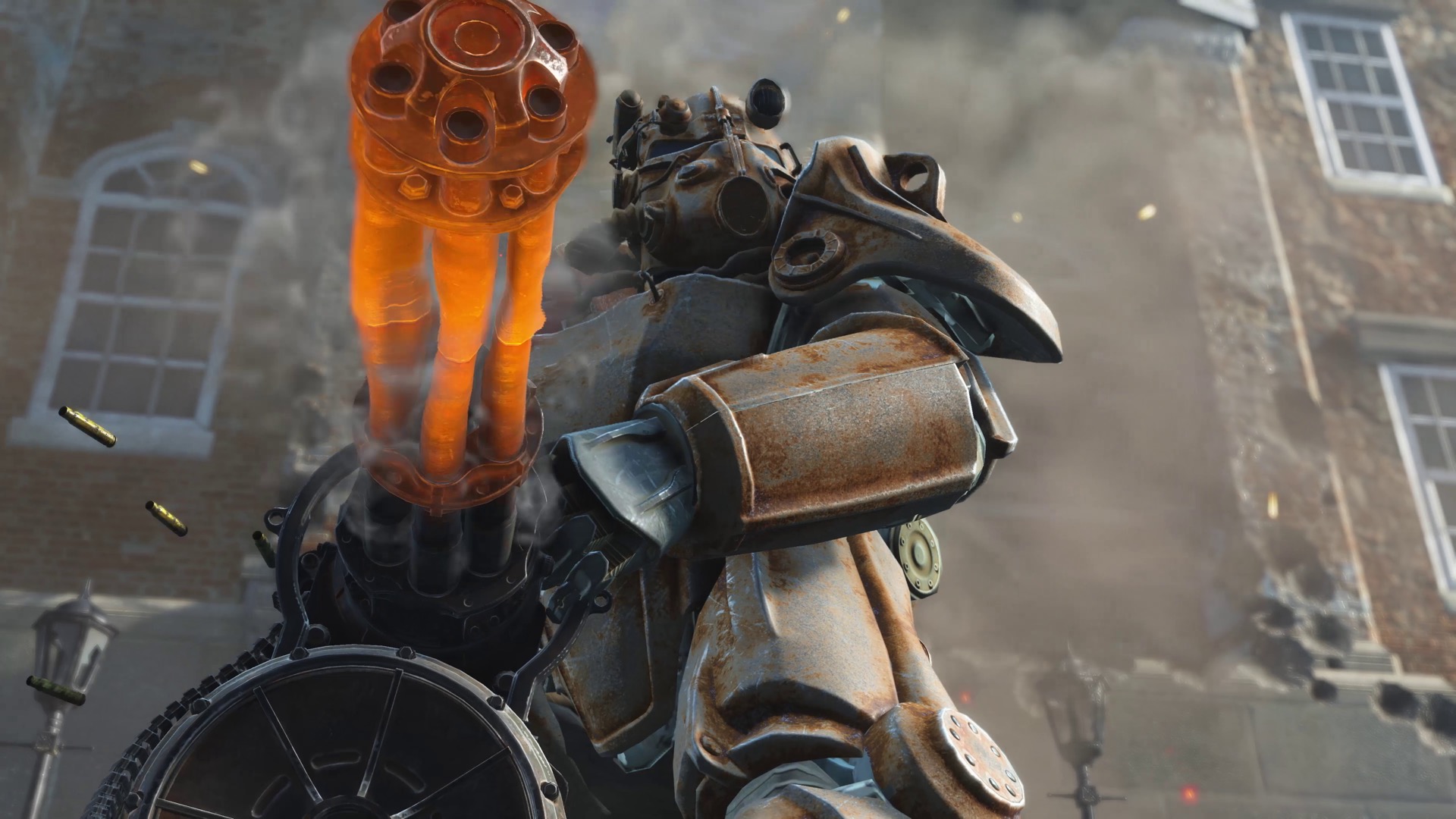
Power armour somebody can watch you climb into
Getting into a frame and out of it goes through the game’s own entry and exit on every client, so other players see the suit close around you, see the pieces on it with their mods, and find the frame standing where you left it. Each piece keeps its condition wherever it goes. The fusion core’s charge is replicated too, and every core a player loads or launches out is checked against the server’s inventory record first. A script can read what a player wears, put them in a frame and take them out again.
Inventory the server keeps
What you carry is the server’s record, not your client’s. Every change is checked against it: you cannot lose items you never had, and a refused change is answered with the truth and rolled back. Each stack keeps its condition, so a half-spent fusion core stays half-spent wherever it goes.
Doors, locks and containers everyone agrees on
Every door, lock and container is synchronised. Which doors stand open and which locks are locked is the server’s say, held for the whole session and handed to anyone who joins late, so a door you shut stays shut for everybody. A container’s menu belongs to one player at a time, and what they leave behind is what the next player finds.
Loose items go to whoever reaches them
Every item on the ground can be picked up exactly once. The first player to ask for it gets it and every other client disables its copy, so two people can never walk away with the same stimpak.
NPCs the server owns
At startup the server takes over the placed actors of every worldspace and interior in the game’s own master files, rolls each leveled list once so every client builds the same NPC, and walks the ones no player is near along the navmesh. A dead one comes back where it was placed. A script can make any of them a player’s companion, and the server takes it along when its leader travels.
Faces and gear that read the same
Appearance, outfits and the weapon in your hands replicate, mods and ammo included. A server can capture the look of any actor in the game, hand it to a player, or open the look editor on demand, then store the look a player made and put it back next time. Scripts can put a player into any of the game’s own idle animations, and everyone else sees the pose.
Voice that carries as far as you let it
Positional voice chat with ranges the server controls, per player and per tier, down to muting and deafening individuals. Each talker is a voice in the game’s own audio engine, placed in the world and mixed by the game the way every other sound is, so a voice falls off behind a wall instead of sitting on top of the mix.
Radio stations the server runs
A script puts a station on the Pip-Boy’s dial and decides what goes on air. Every client carries it as a transmitter of the game’s own radio, so it plays through world radios tuned to it as well. The server stamps when a track started and each client seeks to that moment, so somebody tuning in late hears the same bar as everyone else. The game’s own stations can be taken off the dial and put back.
A clock the server winds
Set the hour, run the day fast or hold it still, force a radstorm or let the weather turn on its own. The world’s state is one replicated entity, so a late joiner arrives into the same afternoon as everyone else.
Interfaces built as web pages
Client resources open Chromium web views over the game, so a HUD, a menu, a scoreboard or a shopfront is just HTML, CSS and JavaScript, positioned and sized from script. Messages pass both ways between the page and the resource that owns it. A view is locked to its own origin and torn down with the resource that created it.
The game’s own HUD, driven by script
Client resources also drive the interface Fallout 4 already has: HUD notifications, quest banners, subtitles and help text, screen fades, menus opened and closed by name, the game’s message boxes, and the dialogue wheel with lines of your own. The pick comes back to the script that asked for it, so a conversation can be written in TypeScript.
A character the server remembers
Level, XP, perks, S.P.E.C.I.A.L., caps and what you are carrying are the server’s record. The game’s own level-ups, perk chart and S.P.E.C.I.A.L. menu still run on your machine; every change they make is reported, replayed against the server’s copy and put back if it does not hold up. A script can award XP, grant a perk, or refuse one before it sticks, and the gamemode keeps the whole character between sessions: the default one saves it to its database and hands it back when you log in.
Servers that bring their own content
A resource can ship loose files, plugins and archives. The client holds the handshake while they are checked, unpacked and mounted as game data, then the game loads them the way it loads any other content, so you walk into a Commonwealth the server has changed without installing a thing.
Markers, cameras and effects, one client at a time
Client resources can put markers on the compass and the Pip-Boy map, read the camera and turn a world position into a point on screen, play sounds, tint the screen, shake it, and place objects only that player sees. A script can also take the game’s free camera, fly it, and set the player down wherever it stops.
A server browser in the main menu
Multiplayer sits in the game’s own main menu: browse the public masterlist, find servers on your network, keep favourites, go back to recent ones, or connect straight to an address. Search, filters and sorting included.
A roleplay base to start from
The default gamemode is a working base for a roleplay server. Players register or log in at Red Rocket, make their character in the game’s own look editor and S.P.E.C.I.A.L. menu, and come back as it. Staff ranks gate the commands, plain chat is local speech under the character’s name, /me, /do, /ooc, /pm and the rest are there, and /pay hands caps across. It is all TypeScript you can read and change.
Run your own server
A dedicated binary configured by one server.json, with its own resources folder, an interest grid sized to the Commonwealth, and a listing in the masterlist only when you ask for one. Windows and Linux builds are published from CI, the Linux server as a container image you can pull, and the launcher patches a player’s installation to the right build before it starts the game.
Not in the current build
Still ahead of us
These systems are planned, but they are not available in Fallout MP today
01 / Planned
An economy in caps
The server already holds your caps and can set them, and the default gamemode lets players pay each other. What it has no support for yet is vendor inventories, player-to-player trade, and scarcity it can actually enforce.
02 / Planned
Quests played together
The game’s own quests still run one survivor at a time. Shared objectives, shared stages and dialogue a group can sit through are ahead of us; today a questline is something a server scripts for itself.
Your next chapter starts here
The vault door is open
Find the latest builds, meet your future neighbours, and help shape what comes next. We’re building this Commonwealth together.